November 1938: Two Broadcasts
Two Catholic voices went out over American radio in the same week of November 1938, and they were arguing with each other. And yet, neither said the other's name.
On November 16, 1938, a nationwide CBS and NBC radio broadcast carried the voices of prominent bishops, clergy, and a lay Catholic speaking from locations across the United States to denounce the Nazi persecution of Germany's Jews.
Kristallnacht was a week old. Ninety-one Jews were dead, more than a thousand synagogues burned, some thirty thousand Jewish men sent to concentration camps. The point of the broadcast was to put the American Catholic Church on record — to demonstrate publicly that Catholics could condemn what Germany had done to the Jews, and do so unequivocally.
As organizer Reverend Maurice Sheehy said at the opening of the broadcast:
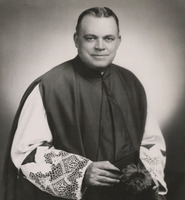
The world is witnessing a great tragedy in Europe today, and after sober, calm reflection, various groups and leaders of the Catholic Church have sought permission to raise their voices, not in mad hysteria, but in firm indignation against the atrocities visited upon the Jews in Germany. The Catholic, as indeed all Christians, believes in the fatherhood of God and the brotherhood of man. The Catholic likes [actually Sheehy said “loves” in the radio version] his Jewish brother, because, as Pope Pius has pointed out, we are all spiritual Semites.
Later, Bishop Gannon of Erie, PA, said:
And now the horrible thing [referring to dictators seizing power in Spain, Mexico, and Russia and persecuting Catholics and others] has broken loose in Germany where the Jewish people, a small, helpless minority, less than 1 percent of the population, are subjected to the fierce passions of the mobs, the harsh, unjust decrees of dictators, and the almost total loss of civic and moral rights. In the face of such injustice toward the Jews of Germany, I express my revulsion, disgust, and grief.
Four days later, on November 20, Father Charles Coughlin answered. He called his broadcast “Persecution, Jewish and Christian,” and he opened by offering to add his voice to those protesting the treatment of the Jews. It was a feint.
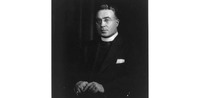
Coughlin was not joining the November 16 broadcasters. He was overwriting them: he mocked “the Most intellectual Archbishop of San Francisco,” one of the speakers, for his sympathies for the Jews. Where they had said the persecution was a crime, he would spend the hour explaining that it was a defense, and that the Jews had provoked it.
Each broadcast was built against the other. The Catholic University protest assumed that someone was busy excusing Nazi Germany to Catholic listeners, and someone was, every Sunday, to an audience in the millions. Coughlin, in turn, opened by borrowing the protesters' language of sympathy so that he could turn it inside out. The two broadcasts are the two Americanisms talking past each other in real time — the starting point for everything this collection traces.
References
1. Kristallnacht dates and figures: Maria Mazzenga, Introduction, American Religious Responses to Kristallnacht (New York: Palgrave Macmillan, 2009).